
Ilham Aliyev
We believe that trust needs to be earned over years, and it can be lost with one wrong step.
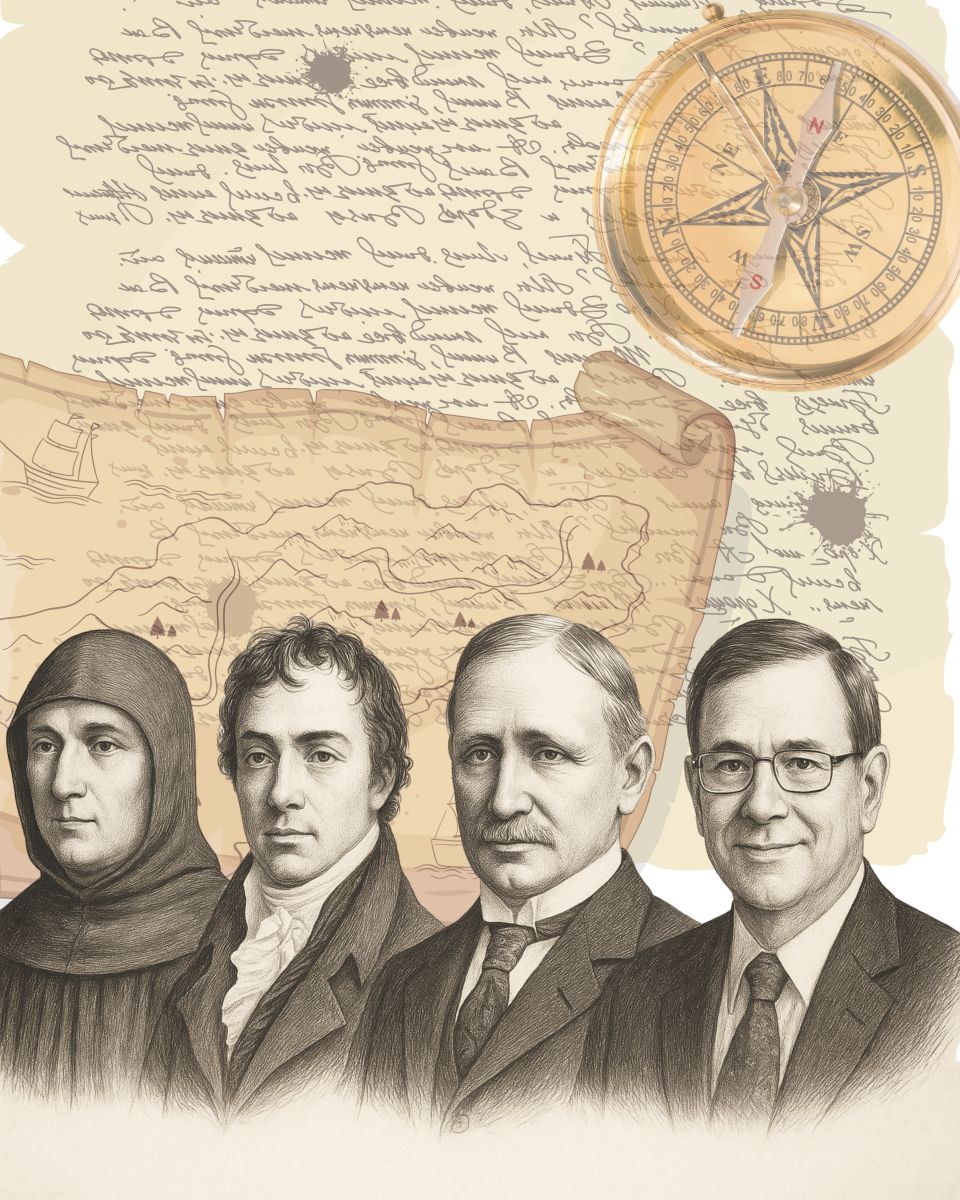
The financial structure of the modern world, its management systems, and reporting standards — all of these are built upon one simple yet revolutionary idea: double-entry accounting. And the architect of this idea was the 15th-century Italian scholar and monk Luca Pacioli. He is known as “the father of accounting” — and for good reason.
In 1494, Pacioli published his monumental work “Summa de Arithmetica, Geometria, Proportioni et Proportionalita,” where he formally explained the double-entry bookkeeping system for the first time. His idea was simple: every transaction must have both a debit and a credit — meaning that if money leaves one account, it must appear somewhere else to show what it was spent on.
This approach brought structure to trade operations, ushered in financial order, and established transparency in reporting.
At first glance, Pacioli’s concept may seem basic, but for its time, it was nothing short of revolutionary. He merged mathematics with accounting and transformed numbers from mere counting tools into instruments of management. As a result, accounting evolved from a technical record-keeping activity into a disciplined and functional science that supports strategic decision-making.
Even after Pacioli, many brilliant minds contributed significantly to the field of accounting and financial analysis:
The father of graphical representation and visual analytics. He was the first to introduce the idea of presenting financial indicators, statistical data, and economic trends through visual charts. His innovation opened new horizons not only for accounting but also for financial analysis and management.
The creator of the “scientific management” theory. Taylor developed measurable systems to manage workers and resources more efficiently. His approach transformed accounting into a planning and performance-measurement tool rather than just a recording mechanism.
Key figures in advancing international accounting standards such as IFRS. Under their leadership, financial reporting evolved into a global, comparable, and standardized system — not just a national one.
Today, accounting is rapidly digitalizing. Artificial intelligence, cloud technologies, robotic process automation, data analytics, and real-time reporting have become standard tools.
Yet despite all this technological transformation, the core principles — double-entry logic, transparency, and accountability — remain unchanged. This demonstrates once again that a system built on strong foundations withstands the test of time.
Pacioli’s groundwork has evolved through technology, but its essence still stands. Numbers have now become a powerful tool not only for accountants but also for entrepreneurs and investors. His contribution makes Pacioli not merely a historical figure, but a visionary whose ideas remain relevant across every era.
In business and management, success today is no longer just about “selling more” or “spending less.”
Success is about measuring correctly, maintaining control, and making the right decisions.
And these decisions — just as Luca Pacioli taught centuries ago — are still built upon accurate and disciplined accounting.

.png)