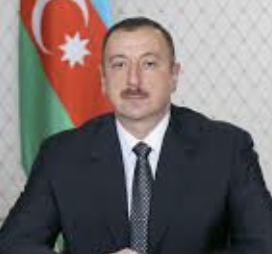
Ilham Aliyev
We believe that trust needs to be earned over years, and it can be lost with one wrong step.

Regulation of Leave Entitlement Upon Termination of Employment Relations
According to Article 110.1 of the Labour Code of the Republic of Azerbaijan, regardless of an employee’s position (profession), working conditions, or the duration of the employment contract, every employee has the right to enjoy the types of leave established by the Labour Code.
Under other provisions of the law, depending on the employee’s social status and length of service, annual leave is granted once a year for 21, 30, 35, 42, 46, or 56 calendar days.
This includes both basic and additional leave days.
However, how is compensation for unused leave calculated when an employee leaves work? And which days are excluded from this calculation?
Under the Labour Code, regardless of the term or working conditions of the employment contract, every employee working under an employment agreement has the right to paid annual leave.
Article 112 of the Labour Code defines the following types of leave:
Labour leave (comprising basic and additional leave);
Social leave;
Educational and creative leave;
Unpaid leave;
Other types of leave that may be stipulated in employment or collective agreements.
Labour leave is the rest period provided to the employee for normal rest, recovery of working capacity, protection, and strengthening of health.
This period cannot be shorter than the duration established by the Labour Code.
Labour leave consists of two main types:
Basic leave
Additional leave
The basic leave is granted for either 21 or 30 calendar days:
21 days – for unskilled workers;
30 days – for specialists, managers, public servants, agricultural workers, non-teaching administrative and academic staff in educational institutions, heads of extracurricular institutions, researchers without academic degrees, doctors, nurses, pharmacists, etc.
Additional leave is granted depending on work experience, working conditions, family status (e.g. mothers with children), or employment in liberated territories.
According to Article 144.2 of the Labour Code, regardless of the reason or basis for the termination of an employment contract, the employee must be paid monetary compensation for all unused annual leave up to the last working day, without any restrictions or conditions.
Articles 118, 119, 120, and 121 of the Labour Code grant employees entitlement to 56, 42, 46, and 35 calendar days of annual leave, respectively.
Although these articles are sometimes referred to as “basic leave,” in fact, the leaves mentioned therein are classified simply as labour leave.
Therefore, when terminating an employment contract, employees with leave entitlements under these articles are to be compensated for labour leave (not only the basic portion).
The employer may thus pay compensation for 42, 35, 46, or 56 days of annual leave entitlement per year of service, as provided under the relevant article.
However, it is recommended that additional or improved terms favoring the employee be explicitly stated in the employment or collective agreement.
According to a response from the Ministry of Labour and Social Protection of the Population, employees who are entitled to labour leave under Articles 118–121 of the Labour Code must be paid compensation for unused leave days upon termination, in accordance with Article 144 of the Labour Code.
Furthermore, under the Decision of the Constitutional Court of the Republic of Azerbaijan dated November 29, 2002, monetary compensation for unused leave upon termination must be paid in accordance with Part II of Article 144 of the Labour Code.

.png)