
Ilham Aliyev
We believe that trust needs to be earned over years, and it can be lost with one wrong step.
.png)
Trust is the invisible yet irreplaceable infrastructure of any economy. Without it, no contract can be fulfilled, no investment can take place, and neither state–market relations nor economic transactions can operate effectively.
Auditing, in turn, is not a mechanical tool, but the ethical and institutional mechanism that shapes and safeguards this infrastructure. Yet today, in many circles, the concept of auditing has either become a formality or reduced to a procedural, paper-based requirement. Its history, philosophy, and institutional essence are rarely discussed.
In this article, our aim is to explore the origins of auditing, the logic behind its evolution, and how it transformed into an ethical, standardized professional framework.
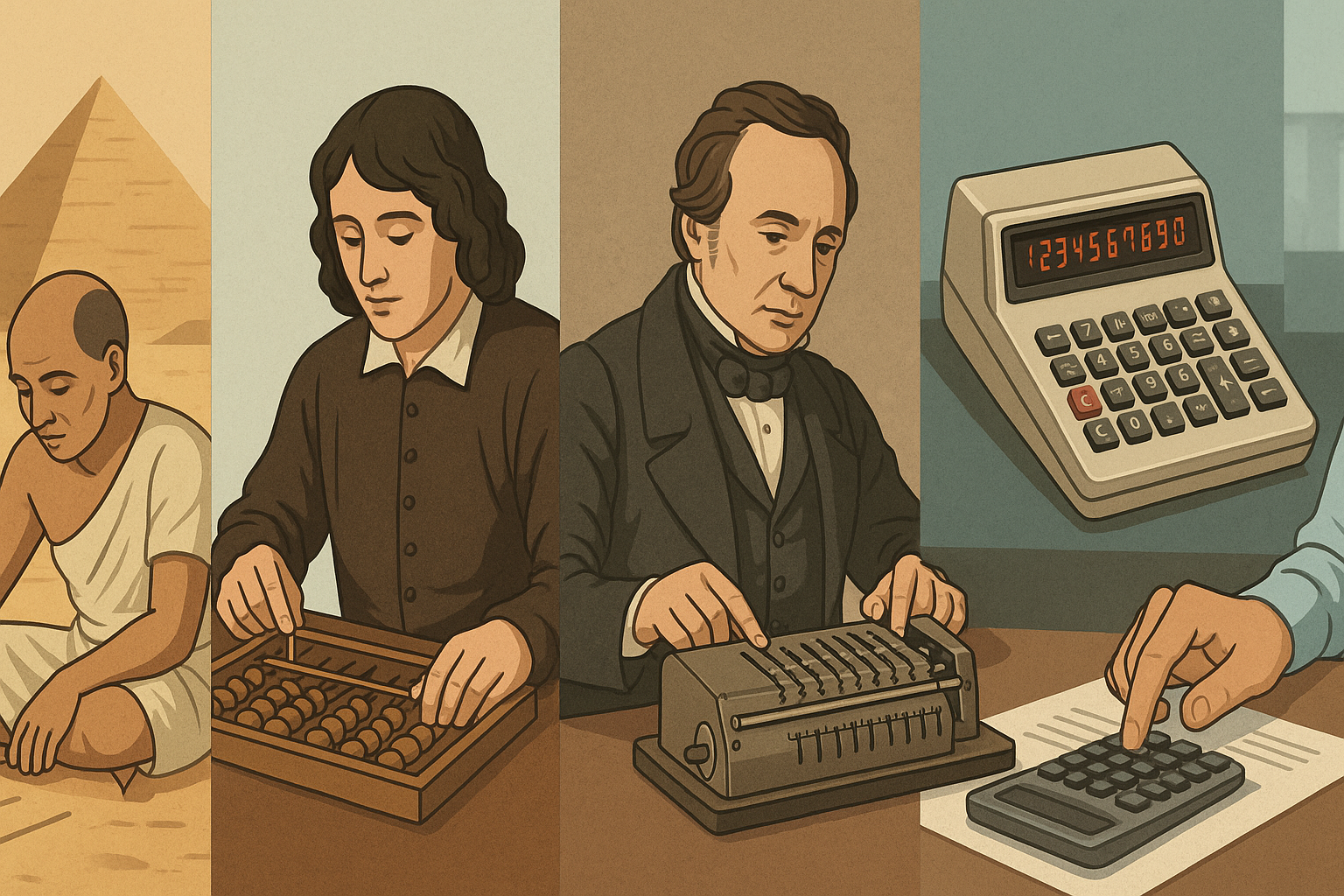
The roots of auditing trace back even before the Roman Empire. The word auditor comes from the Latin audire — “to hear.” At the time, reports related to tax collections and the movement of state assets were read aloud, while the responsible official listened and identified inconsistencies.
During this stage, auditing:
was not a technical process but an extension of personal trust;
lacked formal standards — the main guarantee was the integrity and reputation of the person giving the report;
had no concept of independence or written opinions.
In the 18th–19th centuries, the Industrial Revolution transformed the processes of capital accumulation and distribution. Businesses were no longer accountable to a single owner but to multiple shareholders, creditors, and state institutions. Trust could no longer rely on personal relationships — it had to be based on limited liability and anonymous ownership.
This shift:
led to the establishment of auditing as a formal institution;
made auditing mandatory for the first time in the 1862 UK Companies Act;
repositioned the auditor from being a “friend of the owner” to a guardian of public interest.
The 20th century was shaped by global economic crises, wars, and later globalization.
Most notably, the 1929 Great Depression revealed how manipulations in accounting could collapse an entire financial system.
As a result:
the U.S. established the SEC (Securities and Exchange Commission) in 1933–1934;
GAAP (Generally Accepted Accounting Principles) was developed;
in 1973, IFAC was founded as the global institutional body for auditing and accounting.
By this stage, auditing had evolved from a mere inspection into a legally recognized profession with independent judgment and legal responsibility.
The most complex issue was understanding that numbers themselves do not represent truth. Truth depends on the position, intentions, and values of the person preparing them.
Therefore:
starting from the 1980s, the ethical basis of auditing developed rapidly;
the 2001 Enron scandal demonstrated the necessity of transforming ethics from a formality into institutional oversight;
the IESBA Code of Ethics was introduced and is now applied in over 120 countries.
The goal here is not merely to ensure that the auditor is “honest.”
The true aim is to create a system capable of verifying the auditor’s honesty.
In the modern world, an auditor:
is accountable not to the business owner but to the public;
does not simply issue an opinion but carries legal and reputational responsibility for that opinion;
does not represent personal judgment but embodies a standardized professional worldview.
In other words, an auditor is not a holder of individual opinions, but a carrier of institutionalized professional principles.
Today, auditing requires a renewed perspective.
It is neither a procedural stamp requirement nor a revised version of bookkeeping.
Auditing represents the trustworthy—not merely legal—dimension of economic relations.
Standards are not just technical rules but ethical positions framed within law.
And ethics is not a personal trait but a protected, regulated system.
Only when the auditor operates within this system can trust exist.
Otherwise, an auditor without a system is merely signing a document.
And a signature without trust — means absolutely nothing.